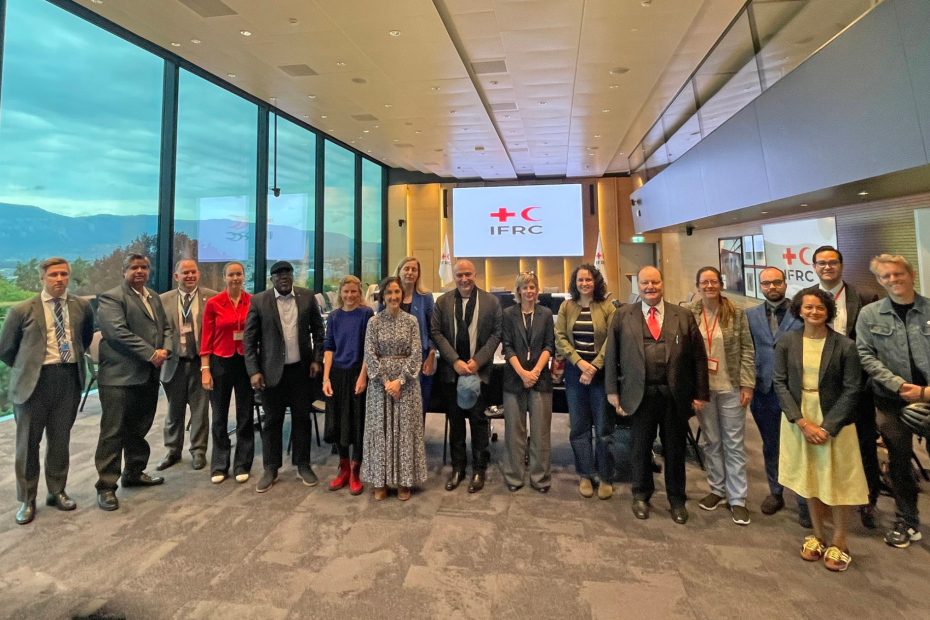
Geneva | May 23, 2025 — For the first time in its history, the International Federation of Red Cross and Red Crescent Societies (IFRC) convened a high-level side event at the World Health Assembly (WHA) to discuss the health and humanitarian needs of people who use drugs (PWUD) and people with drug use disorders (PWDUD).
At the center of this historic moment stood Dr. Massimo Barra, founder of Villa Maraini, senior advisor to the IFRC, and initiator of the Rome Consensus 2.0, representing a global movement that is redefining how the humanitarian sector addresses drug-related challenges.
“Harm Reduction is a Humanitarian Practice”
Dr. Barra’s intervention brought clarity and conviction:
“Harm reduction is a humanitarian practice… based on science and compassion. And we have recognized this, as the Red Cross and Red Crescent Movement, since the 1980s—together with the experience of Villa Maraini.”
This message, grounded in decades of practice, reaffirms the Rome Consensus 2.0’s mission: to bring humanity, dignity, and science into the global response to drugs.
Policy That Works — For People and Public Health
The panel featured powerful contributions from global leaders, including Giovanna Campello, Director of UNODC’s Prevention, Treatment and Rehabilitation Section:
“Health responses to PWUD and PWDUD in contact with the criminal justice system are not only humanitarian, but also effective and cost-effective policies, promoting both public health and security.”
Jennifer Hasselgard-Rowe of the Première Ligne Association added:
“We must not forget the social aspect of the drug problem, drawing inspiration from the Red Cross’s principle of humanity.”
These statements echoed the Rome Consensus 2.0’s core principle: drug policy must be grounded in health, human rights, and humanitarian values—not in punishment.
A Historic Milestone for Rome Consensus 2.0
This side event marked a milestone achievement:
It was the first time the IFRC has addressed drug policy at the World Health Assembly, a testament to the Rome Consensus 2.0’s growing influence in bridging humanitarian diplomacy, public health, and international policy.
From its origins as a visionary proposal by Dr. Barra, Rome Consensus 2.0 has evolved into a global reference point for action-oriented, humane, and coordinated responses to drug use—within the framework of the Red Cross and Red Crescent Movement.
The Road Ahead
The Rome Consensus 2.0, together with IFRC, national societies, UN partners, and civil society, will continue to advance humanitarian drug policy at all levels. The goal is clear:
✔ To ensure that no one is punished for a health condition.
✔ To champion solutions that are evidence-based, person-centered, and grounded in dignity.
✔ To support communities, institutions, and systems in choosing compassion over stigma.
As Dr. Barra concluded:
“We must act not just with science, but with compassion. And we must act now.”
From Geneva to the world — this is more than a moment. It’s a movement.
#RomeConsensus2 #WHA78 #IFRC #VillaMaraini #HarmReduction #HealthAndDignity #RedCross #DrugPolicyReform #HumanitarianAction #Geneva2025