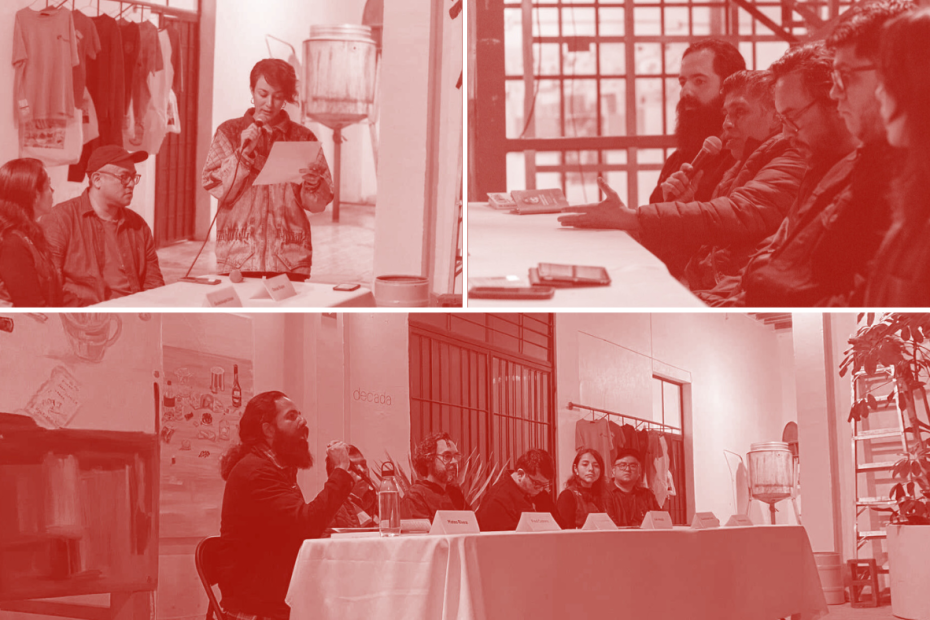
On October 3, 2024, the exhibition “Bodegón del Vicio” by Mexican artist María Portilla was inaugurated at LAGUNA, a creative hub in Mexico City that has become a meeting point for reflection on key social issues such as drug policies. The event, supported by the Knowmad Institut and the Institute for the Care and Prevention of Addictions (IAPA), both members of the Rome Consensus 2.0 alliance, included a panel discussion addressing the importance of more inclusive, dignity-centered drug policies.
A Space for Disruptive Dialogue

Moderated by curator Cristina Pérez, the panel brought together experts from various fields, including Mateo Rivera, an addiction and vulnerable population researcher; Fredy Cabrera, member of the magazine Mi Valedor; Guadalupe Licea, psychologist from IAPA; Joel Anaya, a drug market expert; and Oscar Espin, a mental health researcher from the Knowmad Institut.

During the event, participants emphasized the urgency of rethinking how society perceives and treats people who use psychoactive substances, calling for a shift away from punitive approaches toward harm reduction and comprehensive care. As Guadalupe Licea highlighted, “IAPA seeks to care before curing; we view the use of psychoactive substances as a social phenomenon, not merely a medical issue.” This approach aligns with the principles of the Rome Consensus 2.0, which advocates for protecting the health and rights of people who use drugs, moving away from criminalization.
Joel Anaya, in turn, challenged current public drug policies in Mexico, stating that “the so-called legal protections for marijuana supply represent an administrative disaster,” and called for clearer regulations that do not continue to criminalize users. Consistent with the mission of the Rome Consensus 2.0, this perspective promotes a shift toward drug policies grounded in public health and human rights.

Art as a Tool for Change
Portilla’s exhibition, with its ceramic pieces, served as a bridge to question social notions of “vice” and the consumption of psychoactive substances. José Carlos Porras, a music curator and event participant, summarized this sentiment by stating, “consuming psychoactive substances is a meeting place… I would like us to understand that not all consumption is dangerous.” Such reflections invite a more humane view, in line with the Rome Consensus 2.0’s goals of de-stigmatizing people who use drugs and promoting policies that treat them with dignity.

The “Bodegón del Vicio” event was more than just an art exhibition; it was a transformative space where art and policy converged to spark dialogue on the need to reform drug policies in Mexico. With the active participation of Rome Consensus 2.0 alliance members such as the Knowmad Institut and IAPA, the event reaffirmed the commitment to a humanitarian and harm reduction approach for people who use psychoactive substances. This event demonstrates how art can be a powerful catalyst for social change, fostering conversations that challenge stigmas and promote inclusion.