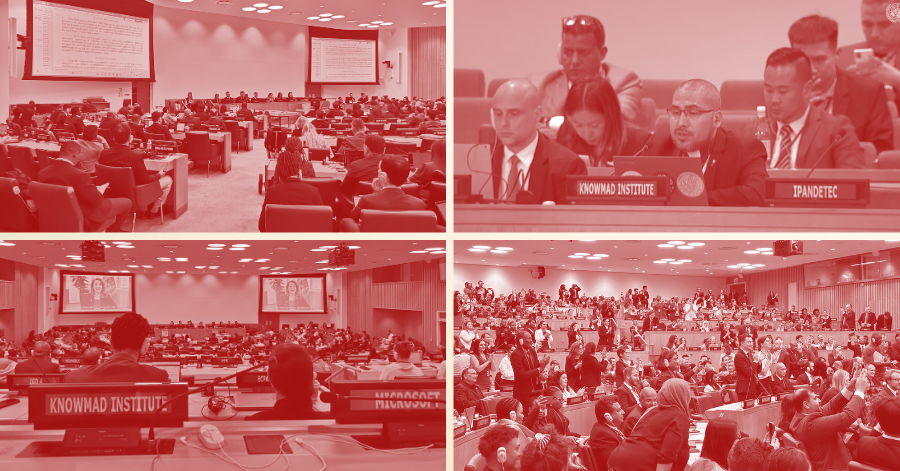
We are pleased to announce that the Knowmad Institute and the C4 Recovery Foundation, signatories of the Rome Consensus 2.0, have brought the voice of our initiative to the building process of the United Nations Convention Against Cybercrime. During the reconvened final session of the Ad Hoc Committee, these organizations emphasized the need to consider current and emerging threats to public health and safety related to drug policies, as well as the potential harms that drug trafficking organizations could cause in an evolving digital environment.
Joint Statement by the Knowmad Institute, C4 Recovery Foundation, and SVA Mission Sacerdotal
This joint statement advocated for the Convention to maintain a balance between combating cybercrime and upholding fundamental principles of human rights, international cooperation, and sustainable development.
Focus on Drug Policies and Public Health
During the deliberations, the organizations stressed that the UN Convention Against Cybercrime must consider emerging threats to public health and safety related to drugs, especially within the context of cyberspace. Key points highlighted by our partners in the process included:
- Review and Appropriate Terminology: A comprehensive review was urged, promoting precise terminology regarding crimes related to information and communication technologies (ICT) and the Internet of Things (IoT). This is crucial to demystify erroneous narratives and promote a balanced and humane approach to regulating controlled substances rather than a purely punitive approach.
- Clear Definition of Drug-Related Crimes in Cyberspace: The Convention should include clear definitions of cybercrimes related to drugs, especially those occurring in digital markets such as the darknet and crypto markets. It is essential to address how these digital environments are used to sell and distribute controlled substances and how they impact public safety.
- Implementation of Deflection Strategies: The proposal to implement deflection strategies in the digital context aims to reduce the pressure on specialized law enforcement agencies. This approach allows for resources to be redirected towards investigating more dangerous and harmful crimes while promoting harm reduction practices in recreational substance markets.
Protection of Human Rights and Harm Reduction
In addition to addressing technical and legal challenges, the statement emphasized the importance of a human rights-centered approach in combating cybercrime. This includes protecting the right to privacy and the security of personal data. Specific recommendations included:
- Humanitarian Approach: Responses to cyber threats related to drugs should adopt a humanitarian vision that prioritizes the dignity and safety of individuals, especially the most vulnerable.
- Promotion of Education and Awareness: The Convention should promote educational and awareness programs on ICT security and cybercrime prevention. These programs should be designed for different levels of user development and ensure the recovery and preservation of information in cyber incidents.
The Knowmad Institute and the C4 Recovery Foundation called on State Parties and all involved stakeholders to remain vigilant and take action to ensure a healthy transition during the adoption and standardization of emerging technologies in the Fourth Industrial Revolution. It is crucial for the international community to collaborate to develop a framework that not only effectively combats cybercrime but also protects and respects the fundamental rights of all individuals.
This joint effort reaffirms the commitment of the Rome Consensus 2.0 to promote drug policies that are balanced, harm-reduction-oriented, and respectful of human rights, both in the digital and physical contexts.
For more information about this milestone, you can read the full analysis here: The UN Convention on Cybercrime: A Critical Analysis of Its Risks to Human Rights.