Since its foundation in 1976 by Dr. Massimo Barra, the Villa Maraini Foundation has stood as a pioneering center for drug dependency treatment in Italy and beyond. As the national agency of the Italian Red Cross and the global training center of the International Federation of Red Cross and Red Crescent Societies for substance use disorders, Villa Maraini has long been committed to a humanitarian approach that adapts therapy to the individual, not the other way around.
With over 220,000 user contacts per year and a workforce of more than 100 professionals, including doctors, psychologists, and peer operators in recovery, Villa Maraini delivers a full spectrum of low-, medium-, and high-threshold services for people experiencing substance use disorders. But one of the Foundation’s most innovative and impactful components remains relatively unique on a national scale: the emergency unit.
The emergency unit: a humanitarian approach where health and security meet
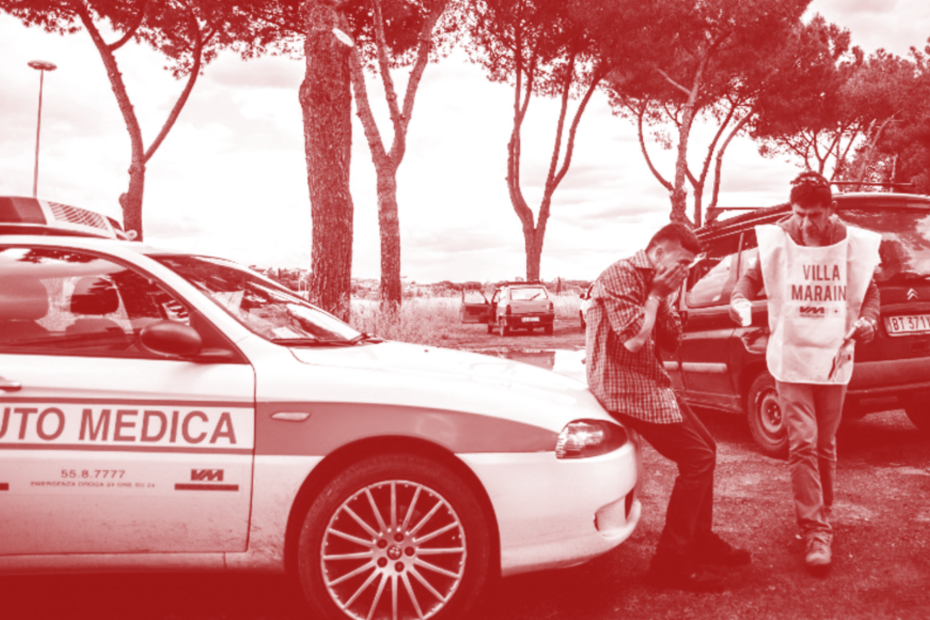
Operating 24/7 since 1994, Villa Maraini’s emergency unit is a first-of-its-kind service in Italy. It was born out of a regional harm reduction project and has been publicly funded since 1998. It provides around-the-clock assistance to individuals in acute crisis due to drug use, particularly those under arrest or in police custody experiencing withdrawal symptoms.
What sets this unit apart is its operational model. It works in close collaboration with police stations, Carabinieri, courts, and emergency rooms, responding immediately to crisis calls through a dedicated hotline (+39 06.558.7777). Staffed by a doctor and an expert peer operator, the unit ensures a humanitarian and health-centered response where traditionally only punitive measures existed.
Key interventions
- Crisis support in police custody: Methadone is administered when necessary to prevent severe withdrawal, reducing health risks and increasing safety for detainees and officers.
- Overdose response: A fully equipped medical vehicle handles overdose calls, reducing pressure on emergency medical services and enhancing survival outcomes.
- Family support: Through home visits and counseling, families are helped in managing addiction-related crises.
- Court and prison collaboration: The emergency unit supports alternatives to incarceration and facilitates care continuity inside and outside detention facilities.
- Support for house arrest cases: Through visits and engagement, the unit motivates individuals toward treatment and social reintegration.
Proven results in public safety and health
In just the past 3 years, the emergency unit has carried out:
- 453 interventions in Carabinieri stations
- 338 in police precincts
- 840 in court settings
- 718 in hospitals and clinics
These numbers reflect a deeply integrated response system that not only addresses health emergencies but actively contributes to urban safety, harm reduction, and the de-escalation of conflict and violence. It bridges the gap between marginalized individuals and care services, while simultaneously alleviating the burden on law enforcement and public health infrastructure.
Ongoing work at Ponte Galeria’s repatriation center
Villa Maraini also supports the Centro di Permanenza per il Rimpatrio (CPR) in Ponte Galeria, offering daily and nightly toxicological consultations for detained foreign nationals. This collaboration ensures medical due diligence and safe custody conditions, and positions Villa Maraini as the only center of its kind available nationwide to law enforcement agencies managing such procedures.
Looking forward: deflection, not detention
In light of over 30 years of collaboration with law enforcement, Villa Maraini is now poised to launch a pilot deflection project in Rome, promoting early, health-based intervention in place of punitive action. This model would:
- Train officers in addiction management and de-escalation.
- Connect individuals with appropriate treatment services through an efficient referral system.
- Build trust between vulnerable individuals and institutions.
- Reduce recidivism, healthcare costs, and social exclusion.
This initiative aligns with the Rome Consensus 2.0’s vision of prioritizing health and human dignity in the global response to drugs.
A humanitarian approach that works
Villa Maraini’s emergency unit is more than a service—it’s a testament to what’s possible when public health and law enforcement work together for the common good. It has proven that humanitarian drug policies are not only ethical but effective, contributing to public safety, individual recovery, and social cohesion.
May 21 in Rome: toward a permanent Task Force between health services and law enforcement
On May 21, 2025, Villa Maraini will host a high-level event to formalize its long-standing collaboration with Rome’s law enforcement agencies. The event will feature Italian institutional representatives and an American delegation from the Rome Consensus 2.0, including leaders from PTACC, TASC, and C4 Recovery Foundation – global pioneers in deflection and diversion models.
The goal: to launch a permanent task force between health professionals and law enforcement in Italy, promoting an integrated and non-punitive response to drug use, with a special focus on opioid-related emergencies. The event will also foster an international exchange of best practices in this field.


Link for remote connection to be provided
by Mauro Patti, Policy and Partnerships Advisor, Villa Maraini Foundation- Italian Red Cross